Friday, August 31, 2007
Being a Friend of Worth
 I stumbled across an article about friendship which I kept from many years ago about the underpinnings of having deep friendships that are based on biblical principles. Back then, having meaningful friendships was something I desired greatly, and I guess that was why I kept the piece of paper.
Reflecting on this article, I am inquiring afresh: Are these chracteristics realistic to expect and pursue in friendships in this day and age? What model can we follow? Read on to see what you think...
Being a Friend of Worth
In today's highly mobile society, friendships tend to be superficial. God's word, however, gives us a model for life-giving and enduring friendships. The friendship between David and Jonathan recorded in 1 Samuel 23:15-18 portrays the vital characteristics of biblical friendship.
- A friend meets the need of another
Jonathan risked his father's wrath to help the very man who was a threat to his own position as heir apparent to the throne of Israel. Seeing a need in David's life, he reached out to meet that need. Authentic friendship involves having a concern not just to find "my kind of friend", but to meet the needs in other people's lives.
- A friend encourages his friend in God
Jonathan encouraged David to be directly dependent upon God when he was threatened by bitterness and discouragement. The yardstick to meansure the worth of our friendship is, "Is our friend stronger in God because of the time he or she spends with us, or is spiritual growth a side issue in our relationship?"
- Friends share deep common interests
David and Jonathan shared a common love for God and His people. What common interests do we and our friends share? Friendship is borne out of the linking of many threads, and the quality of those interests will reveal a great deal about the quality of our friendship.
- A friend is committed to help his friend realise God's purpose and potential for his life
Jonathan selflessly declared to David, "... you will be king over Israel, and I will be next to you..." A great Russian novelist said, "To love a person means to see him as God intended him to be." Jonathan not only saw the potential in his friend, but also acted to bring that potential into reality.
- True friendship involves declared loyalty and commitment
David and Jonathan did not simply drift in and out of their friendship. They made a covenant before the Lord. Verbally acknowledging to our friends that we value and are committed to them frees us to be more effective friends. Practising verbal commitment and encouragement is not one we all find easy. Yet, when we get past that threshold into having friendships that are based on a deep sense of commitment and loyalty, that's where the masks are removed and true comradeship can begin.
--------------
In our lifetime, I realise that we would be extremely blessed to find two or three friends that exhibit the kind of characteristics stated above. In the process, some investments to develop friendships will pay off, others will not. That's one of life's realities. In the course of disappointments and unfulfilled expectations, many of us would have stopped short of not finding companions for the long journey because we have given up, and resigned to operate at a relatively superficial level; never getting to a point of being real.
Back to my orginal questions: Are these chracteristics realistic to expect and pursue in friendships in this day and age? What model can we follow?
We often talk about "finding friends". But the biblical model is less about searching for friends. Instead, it encourages us to look outwards to "be a friend" based on a strong foundational relationship with Christ: A man who has friends must himself be friendly; But there is a friend who sticks closer than a brother (Ps 18:24, NKJV). I am reminded that it is more important to BE the kind of friend that we expect others to be to us. This is in contrast to us expecting others to meet our needs.
Since the many years I have kept this short article, I have come to see the truth that is inherent in some of the principles that have been brought forth here. I have gone a bit further in developing the kind of friendships which are life-giving and enduring. As usual, the Lord's wisdom in this matter rings true, if we stick to it.
Labels: Christian Living, Friendships, Relationships
Continue to read "Being a Friend of Worth...."

Saturday, January 13, 2007
Finding a route through unforgiveness
 It's strange - over the past few months, I have been experiencing a sense of "grief" over the loss a close friendship. What added to the burden was the fact that the separation was precipitated by an offence committed against him through my own fault (one may even say stupidity). We have talked at length about the offence, and I have put forth so many sorries requesting for forgiveness, but to no avail. As with most conflict situations, the first offence often creates subsequent offences. Hence it was not a case of a one-sided offence.
So what does one do when the other party cannot (or refuses to) forgive? Standby and wait? Or walk away completely? Through these unfolding events, I am learning more about the nature of forgivess, and what it means to be forgiven. Here's more...
- Forgiveness before God first. For me, I felt that I needed to stand before God to ask for forgiveness first. It's not merely about the wrong that one has done and the hurt caused. Because the first fruits of repentence need to stem from standing before God first, and asking for forgiveness. We can feel sorry because of many reasons e.g. to remove guilt just to make us feel better. These do not result in us clinging closer to God, but rather, to focus on self away from Him.
 The desire for vindication. Here, the element of choice needs to be rigorously exercised - choosing not to retaliate, choosing to protect the other person's reputation, and choosing to preserve the other person's freedom without trying to manipulate the circumstances to "make it better". If bitterness and resentment grows (by us taking vindication into our own hands), what is at stake is who we ultimately become. We can follow the path of Christ, or towards the path of barrenness.
Protecting our walk with God. Satan is all to happy to use a conflict situation to start tear down what God is doing in our lives; he may use the words of common friends or bystanders to the situation to discourage; or try to convince you that to disqualify yourself from the race because you blew it. Here, one needs to choose God (and His Kingdom's purposes in you) above all adversarial messages thrown at you; and in many ways, ignoring the voices of guilt in order to press through - Only when one abides in the Lord's strength can one maintain resolve - "to walk and not faint" as the bible puts it in Isaiah.
Responding in love. In broken relationships, there will be a desire to not want anything good for the persons involved for something they have done (or not done). Instead, God calls us to not only not retaliate, but to not withhold good from those who have offended or hurt us. It is during times like these when our sacrifices and obedience to God costs something and authentic.
Again, only when one abides in the Lord's strength can one maintain resolve. Our natural instincts and notions of what love is often not the kind of love God calls us to towards. We learn only as we obey - there is no way otherwise. In matters with people, our hearts learn in doing what our minds can only theoretically comprehend.
Discerning the right time to walk away. It can be very human for us to protect ourselves from further hurt and make a decision to walk away from a conflict situation. It is probably right to say that there has to be a time when one needs to stem the 'bleeding', but that time needs to be determined by God's leading and not merely our reaction to hurt.
 Ecclesiastes 3 says, "... a time to embrace and a time to refrain, a time to search and a time to give up, a time to keep and a time to throw away, a time to tear and a time to mend, a time to be silent and a time to speak..." -- that is no doubt true, but the "time" mentioned in these passages can only be fruitful, and in some cases redeemed if it's fully given to the Lord for His keeping. If it is indeed the right time to walk away, God needs to first give us the release in our spirit. This was what I sensed this week: that it was right (and the right time) to close the door and walk away.
Differentiating between unforgiveness and reconciliation. In the end, there needs to be freedom and liberty with all parties involved. We should not continue to be in bondage to resentment and unforgiveness. However, whether there should be reconcilition, remains another matter. Unforgiveness remains the shackles that bind us. So forgiveness is mandatory from God's perspective. Reconciliation, on the other hand, is what we can do after we are free. For instance, from a Christian perspective, a wife who has decided to walk away from her physically violent husband needs to forgive her husband. But whether there can be authentic reconciliation is dependent on whether her husband changes his ways. Sometimes, there is no desire for a future relationship, and to not be reconciled is necessary to preserve freedom.
Someone once said: Our deepest longing, our greatest hopes, our very cherished relationships, our most vigorous pursuits, and our most condemning weaknesses - all need to be subjected to the all encompassing person of Jesus Christ. Where you fix your eyes, there is who you will become.
Indeed, Christ will take the fallout from broken relationships if we let him, and then we are free to move on. But the point is that we have to move on - sometimes that means that one should be prepared to walk away unreconciled (with our conscience clear before God of course). Relationships that do not break will be stronger. On the other hand, relationships that do break and do not mend should not be a burden that ties us down. We continue to run the race.
Labels: Forgiveness, Friendships, Relationships
Continue to read "Finding a route through unforgiveness...."Friday, December 15, 2006
Relationship Foundations - Part 2
 10 Rules for Fair Fighting
All of us need to be able to have healthy confrontational conversations, especially in close relationships. The question is how do we fight, yet preserve the integrity and intimacy in our relationships? In other words, how do we fight in relationships yet stay within the boundaries of love?
There are no methods to apply because people matter more than methods, but the following guidelines may be helpful...
1. No ambush
Make an appointment to talk: (a) for a certain time and place, (b) for a certain issue.
2. Present your arguments sensibly
As preparation for the discussionm work out for yourself exactly what you want, and the reasons why you want it. Organise your arguments. Be sure that what you are asking for is really what you desire, and that it's the real issue which is being discussed.
3. Listen carefully to your partner
Every time your partner makes a point, restate the point in your own words to make sure you understand exactly what he/she means. Before you respond to any point, check to be sure that you understand how your partner feels. Ask questions.
4. Stick to the issue
Fight about no more than two related issues at a time. If side issues are raised, these must be laid aside for another fight. Past history is nearly always irrelevant. Don't pin labels or attributes on your partner. ("You're always...", "You never...")
5. Agree on what kind of behaviour is acceptable
This needs to be negotiated between the couple. Some possibilities are: acceptable posture (e.g. standing or sitting), tone of voice, no coercive behaviour, etc.
6. Keep all blows above the belt
By the time a couple has spend time together each knows the sensitive areas of the other. they know just the area in which the other can be hurt. Attacking these areas is a "foul" (in sports analogy). This assures that the belt line is not dishonestly set higher than need be.
7. Don't over react
While it is certainly appropriate and necessary to fight about relatively minor issues so that they don't build up, do not fight with more force then the issue warrants. Are you hiding larger feelings behind something trivial?
8. If you can't settle the issues, table it for a later, specific and agreed upon time
Often a complicated issue cannot be resolved in one sitting. A temporary truce can often be helpful in rethinking one's own position, cooling off, or simply recovering from fatigue. Time and place to resume the discussion should be agreed upon.
9. If you can agree, decide how to carry out your decision
Who will do what, is there a deadline?
10. If you are later dissatisfied with the decision, you must make an appointment for another discussion
Labels: Christian Living, Friendships, Relationships
Continue to read "Relationship Foundations - Part 2...."Thursday, October 05, 2006
Relationship Foundations - Part 1
 Differentiating forgiveness and trust
How can I forgive and trust again?
This is often a question each one of us will ask ourselves at one point or another through our lives. I don't know its one with an obvious answer, but I find that as we wade through the waters of life and relationships, the answer to this question becomes harder in practice to come by. I have been at both ends being the person that needs to bestow forgiveness, as well as being the person that needs to receive forgiveness. I am in a situation with a close friend for the latter, hence the current thoughts about this.
People often confuse forgiveness and trust, but they are totally different things. If you have come face to face with the dilemma of "how can I forgive without opening myself to being hurt again?", then it is important to make a clear distinction between these two elements.
Forgiveness has to do with the past -- it is not holding something someone has done against you and letting go. Obviously, when there is a great deal of hurt, getting to the point of true forgiveness can take time, so it does not always happen immediately. If other person(s) involved wish to give/accept forgiveness, then there is reconciliation, and this has to do with the present.
However, the whole aspect of trust has to do with the future. It deals with what you will risk happenning and what you are willing to open yourself to again. A person must show through his/her actions that he/she is trustworthy before one can trust them again.
In some situations one may forgive someone, but desire no future relationship. Forgiveness does not dictate the future structure; they only wipe the slate clean. Both forgiveness and reconciliation are important requirements which the Lord has called us to live by. But that does not necessarily mean that trust should be given away easily. If a person cannot demonstrate by their actions trustworthiness, then trust will be difficult to come by.
The key point here: Keep the future clearly differentiated from the past. Again, sound advice for me to be reminded of.
Source: Certain sections condensed from "Boundaries Face to Face", Dr. Henry Cloud and Dr. John Townsend
Labels: Forgiveness, Friendships, Relationships
Continue to read "Relationship Foundations - Part 1...."Tuesday, August 22, 2006
The Enemy of Intimacy

I am amazed how lucidly Henri Nouwen writes, once again on a theme which has been on my mind.
"Fear is the great enemy of intimacy. Fear makes us run away from each other or cling to each other but does not create true intimacy. When Jesus was arrested in the Garden of Gethsemane, the disciples were overcomed by fear and they all 'deserted him and ran away' (Matt 25:56). After Jesus was crucified, they huddled together in a closed room 'for the fear of the Jews' (John 20:19). Fear makes us move away from each other to a 'safe' distance, or move towards each other to a 'safe' closeness, but fear does not create the space where true intimacy can exist. Fear does not create a home. It forces us to live alone or in a protective shelter but does not allow us to build an intimate home. Fear conjures either too much distance or too much closeness. Both prevent intimacy from developing."
Here is more of what he says...
"But whether through distance or closeness, fear prevents us from forming an intimate community in which we can grow together, everyone in his or her own way. When fear separates or joins us, we can no longer confess to each other our sins, our brokenness and our wounds. How, then, can we forgive each other and come to reconciliation? Distance allows us to ignore the other as having no significance in our lives, and closeness offers us an excuse for never expressing or confessing our feelings of being hurt."
From "In the House of the Lord", Henri Nouwen
Labels: Christian Living, Friendships, Relationships
Continue to read "The Enemy of Intimacy...."Sunday, July 16, 2006
Emotional Shelter
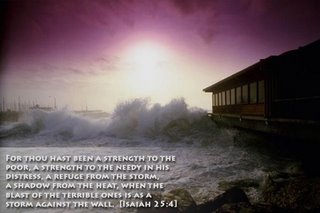 A thought dawned on me last week. Love from people close to us acts as an emotional shelter over us. By that, I mean that the knowledge that you are loved can be the most powerful protection against everything that can possibly hurt us emotionally - whether its from adverse circumstances, ourselves, or other people. Conversely, the lack of it can leave us vulnerable.
Relationships, whether family, spouse or friends, are defined or broken by times of crises, and the mettle inherent in its fibres tested during pain and turmoil. In seasons of hardship, one is likely to find out how much 'emotional covering' we have - I certainly have. Let me explain.
Through my own experience of dealing with grief, I have been surprised by unexpected people reaching out to me when I didn't even have the strength to ask. On the other hand, I have also felt let down by relationships which I thought had deep roots to withstand stormy weather, but instead did not translate into any tangible action.
 Oddly enough, the comfort I feel is not in the things people have said to me regarding my gran's passing; but it was in the small deeds of the people who bothered to inquire how I was at the point when I needed it most. It didn't require me to share a lot, but the thought of knowing that I am cared for and loved - and that there was a 'place' I could go to - was sufficient grace for me. Anyone who has gone through a period of grieving probably shares the same sentiment. Indeed nothing anyone can say truely can take away the ache -- that much I have to accept. I still struggle sometimes with my thoughts when certain things remind me of my grandmother, but God has been faithful to provide places of shelter, where His grace is sufficient.
I now perceive more clearly my relationships -- where, and how much covering I possess. The ones that I have, I am learning to cherish, whilst for the others, I am learning to leave behind and move on. Life is strange - the fires of hardship have ways of revealing what is true and steadfast.
I guess what I am learning in a more profound manner, is that love is defined by what we do, but also what we don't. I finding out in a deeper way God's call for us to "not love in word or in tongue, but in deed and in truth" (1 John 3:18).
Labels: Encouragement, Friendships, Relationships, Spiritual Direction / Guidance
Continue to read "Emotional Shelter...."Thursday, April 20, 2006
Honest grounds and shared journeys towards change
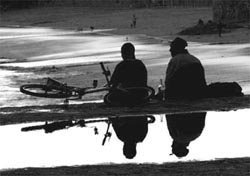 As we get older, I realize that it more difficult to ask that question of ourselves and yet, still feel that change comes easy. This question is something we should be asking ourselves periodically anyway, but it is more appropriately answered by people who know and are close to us. The quest to answer this question is akin to holding up a mirror to our soul; if we are to examine ourselves realistically, we have to be sure that we have an accurate reflection to glean from.
If so, do we even possess close enough "mirror to your soul" relationships that we can ask that question to and not be afraid of the answer?
I am reminded over the long Easter weekend how blessed it is to have close enough friends whom you can ask that question and be certain one will get not only a truthful answer, but also a grace-filled one. If you have people like that around you, then you are blessed.
However, going down this avenue also reflects a certain reality of one's desire for change and growth, one that is not necessarily the most comfortable of journeys to make. I was chatting to a friend recently and the conversation flow stumbled over the topic of change. With him being a good mate, I took the chance by posing the question to him, "If there is one thing about myself that I should change, what do you think it should be?" And I am glad I did.
Cause it started a precious exchange of open sharing and encouragement - sometimes touching on the "not so pleasant things"; things about ourselves which are 'painful' to hear. However, this was under girded by a sense that we weren't judging one another for revealing sides of ourselves that are weaknesses.
Throughout the discourse, there was no fear, no shame, and no defensive postures. It was safe territory. Pertaining to myself, I was reminded from this close friend that I needed be careful about my speech. I realize that I do not need to push to "be correct" all the time, especially not at the expense of relationships.
"If there is one thing about myself that I should change, what do you think it should be?"
The discussion with this friend around the above question gave me hope that I have friends looking out for me. It also gave me the desire to encourage and facilitate change in both myself, as well as the friend I was sharing with.
It challenged me to think further: Maybe I should ask that kind of question more often, and build more relationships that have enough depth without being afraid that the foundations will crumble -- for people to 'dig deeper into the ground to let air in'. On our part, what is required is for us to be malleable, and that can be the one of the hardest things in the world to be.
As we get older, inertia drags us down and arguably we may feel we know it all. The ultimate question for each of us to answer is: Do I still want to be changed by the Lord? And if so, are there people in our lives that He has put in our paths to help us change? As I reflect further, I realize I am very far from the true destination of becoming the person I am to be in Christ. I may have traversed far, but I have got many more miles to go. The finishing line is not yet crossed. With this realization, I sense a renewed desire to continue walking on solid ground and have godly companions to travel with. This recent chat gave me further fuel for the journey and I am thankful for that.
Lord, equip us to be on the road to arrive at the right destination.
Labels: Change / Progress, Friendships, Spiritual Direction / Guidance
Continue to read "Honest grounds and shared journeys towards change...."Thursday, March 23, 2006
Excerpt - Windows of the Soul
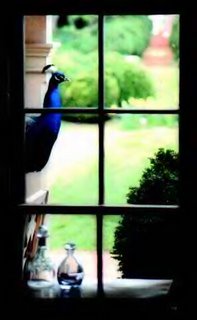 The following excerpt is from a book called "Windows of the Soul" from Ken Gire. When I first read it, I was deeply moved because I could relate to the sense of blessing inherent in another another person reaching out to me. The person did not know it, but God used that incident and it influenced the course my life in so many ways at that young age that I cannot imagine how things would have turned out otherwise.
In what follows, Ken Gire artfully describes an awkward boy with cerebral palsy, and his interactions with his friends, one of them Ken's daughter. And as the author says, we are poor in many different ways. Aren't we? Maybe I saw a little of myself in the awkward kid, and perhaps my yearning was for something that each one of us would like to have. I don't know what it is, but this story was profoundly moving, and still is.
I would encourage a full reading of the book if you have the time. If not, this slightly lengthy excerpt will hopefully make a worthwhile read:
Windows of the soul offers glimpses, however fleeting, and echoes, however faint, of some of the things that are dear to God. I caught one of those glimpses on a Sunday afternoon obscured with activity. It should have been a day to push back the papers that cluttered the desk of my soul, but the papers were urgent and I was anxious. I was behind a writing project with a fast approaching deadline, so I set aside the Sunday afternoon to spend catching up.
Early that afternoon, though, my daughter asked if I could take her to see a friend who was playing in a roller hockey game. The friend was a boy whom I'll call Joey. He had cerebral palsy, my daughter said, and he asked her at school Friday if she could come and watch him play. She told him that she would, if she could get a ride.
As it turned out, I was the only ride available. I said yes, knowing that if I didn't, that something precious would be lost, and though I didn't know what it was, I knew that it was greater than whatever could be gained by saying no.
When we arrived at the roller rink, I went in with her, thinking that I could find a quiet nook and get some work done. But inside all kinds of noises echoed off the bare walls and the slatted wood floor. Video arcades lined one of the walls, luring young boys with loose change. A concession stand lined another, luring the rest of us. Families of players milled around, talking; several of them leaning against the parameter railing. I was looking for an out-of-the-way place to write when my daughter pointed out Joey. He was playing goalie, hidden behind shin guards, face mask, and a chest guard. He had been positioned where he didn't have to move much, so I hardly noticed that he was handicapped. All I noticed was that he stood a foot taller and years older than other players.
Gathered behind the railing behind Joey were four boys from my daughter's school. She joined them while I nested a vacant table, taking out my pen and notebook, busying up myself with all the catching up I had scheduled for the afternoon. But the sight of those five high school kids and the sound of their cheering distracted me. I stopped and paused and wondered if there was something I should be paying attention to, something that might prove to be a window to the soul.
I turned a fresh page.
I watched. I listened. And I framed the moment with words.
- "Way to go, Joey", one of boys calls out.
- "It's alright, Joey."
The five high school kids cheer.
- "Way to go, Joey."
- "Don’t worry, Joey."
- "Way to hustle. Great defense. Yeah."
"Good job, Joey."
- "Joey, you’re doing great."
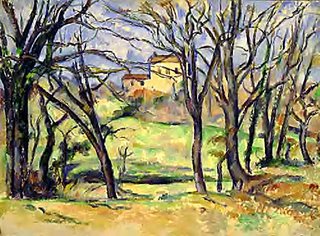 In a letter dated October 10, 1907, the poet talks about his first exposure to the artwork of Cezanne, how he spent hours in front of his pictures, looking, listening, trying to understand them: “I remember the puzzlement and insecurity of one’s first confrontation with his work, along with his name, which is just as new. And for a long time, nothing, and suddenly one has the right eyes. I sat in front of the picture, looking, listening, trying to understand it. For a long time, nothing. Then a memory of the widow at the Temple made a silhouette of my thoughts. She was a person no one noticed until Jesus framed her with his words. I thought of the picture of that poor widow. And of the passage where Jesus talks about giving to the poor. Then of Joey. And suddenly I have the right eyes. Suddenly, I realized that there are many ways that a person can be impoverished, and sometimes the least of those ways materially. That was the case with Joey. His poverty was not material; it was relational. He didn’t need money or what money could buy. He needed something it couldn’t buy – friends. He needed, as we all need, friends who will show up at a cross-town roller rink, lean against the railing, and cheer him on. Some people are rich in friends like that. Joey wasn’t.
Joey was an impoverished kid groping for his soul’s daily bread in the halls of his high school. With sometimes lame and awkward overtures, he accosts his classmates, holding out his hand for a crust of what they have in such abundance. He begs them to look beyond the disease and all it has robbed him of. He begs them to look beyond the slur of his words and the shuffle of his feet. He begs them to see Joey. Of course he can’t put it into words like that or into any words close to that. His inarticulate emotions can express themselves only in frustration, bouts of depression, and outbursts of anger. It’s the way of the artist, calling to those walking away from his art, begging that they come back and look beyond the paint to see the passion of his soul enflamed on the canvas.
With the language of emotion, a complex and indecipherable language, Joey is begging them to look beyond the jarring and disjointed Picasso that his life appears to be on the surface, pleading with us to see within him the beautiful and breathtaking Michelangelo, which is no less the very image of God. "If we are to love our neighbors," says Frederick Buechner, "before doing anything else we must see our neighbors. With our imaginations as well as with our eyes, that is to say like artists, we must see not just their faces but the life behind and within their faces."
That day I saw something behind the face of the hockey mask and rink on that Sunday afternoon. I looked beyond him to the five kids still at the railing. They could have been at the video arcade. They could have been at the concession stand. They could have been at the table, talking among themselves, joking among themselves, preoccupied with themselves. And who could blame them if they were? We would be there ourselves, doing the same things ourselves, wouldn’t we?
But they weren’t there; they were at the railing. They weren’t preoccupied with themselves; they were preoccupied with Joey. Watching him. Encouraging him. Cheering him on.
And as they did, something changed hands. What was it? I squinted. A gift of some sort. A gift Joey desperately needed. Neither the hands of the giver nor the hands of the receiver were aware of the exchange. But the Father who sees it in secret, He saw it, He took note of it, He treasured it. And so did I.
Was that all there was to see in that picture? Or was there more?
 I looked again. For a long time nothing. And suddenly I have the right eyes. Beyond Joey and beyond the gift that has been given him, I saw a girl who had given up a Sunday afternoon to help give that gift. She had asked to be there. She could have been asked to be somewhere else, the mall, the movies, anywhere. She told a boy with cerebral palsy she would watch him play if she could find a ride. She found a ride. And she kept a promise to someone for whom promises were not so much broken as they were simply forgotten. The picture was a window to my daughter’s soul, revealing to me something of the secret of who she is, a secret I need to know if I am to understand her and nurture her and draw out in her all that is dear to God.
That Sunday afternoon in that roller rink I saw something sacred, something dear to God. And in a sudden, somewhat sobering moment, I realized that I was the only person in the world who had seen it. Something about that made me feel special, excited to be alive at just that place and at just that time to see then and there what no one else had seen.
And yet something about being the only one also made me feel sad. The moment did something to me that I can’t quite put my finger on, let alone find words for. Maybe, there are no words for such moments in a person’s life. Maybe some moments are too sacred for words. What I experienced that day was profoundly moving, and one of the places it moved me was to wonder: How many windows have I missed because I was too busy to look? And how much wisdom have I overlooked because I was too behind in my schedule to even see what was being offered?
 The problem is not entirely in finding a quiet nook in this roller rink world of ours. The problem is quieting the soul in the midst of the noise.
Open your eyes. Otherwise you may miss the windows the Lord has opened for you in seeing another person's heart, or making that little difference that can mean the world.
Labels: Encouragement, Friendships
Continue to read "Excerpt - Windows of the Soul...."Wednesday, June 15, 2005
Article - Good friendships
Over the past few weeks, I have been back in my hometown. Most of my school mates have left the place and hence there have not been many interactions with friends. Been reflecting a bit on my own friends and what makes it work.... The following article pretty much sums it up nicely, but for me (probably most of us in this area), reality plays catch up with theory. We can only strive first to show ourselves friendly (Proverbs 18:24) instead of expecting others to take the initiative.
Friendships
Good friends can be hard to find. Acquaintances, associates, partners, and colleagues are found in abundance. But a true friend is scarce, and to be treasured. If friendships are to become good and lasting, both friends need to work at being good friends.
What are the characteristics of a good friendship?
- Makes time. Most friendships fail because of neglect. Making time means getting off work early to accompany a friend to an anxiety-provoking doctor's appointment, or canceling another commitment to attend a friend's acting debut at an amateur playhouse. A friend will make time for the other's significant life events, moments of crisis, and - equally meaningful - in the midst of the mundane.
- Keeps a secret. Sharing your secrets helps you explore what's troubling you and get reaction to what you've been holding in your heart. You need to tell your secrets to people who are trustworthy, consider it a privilege to hear what's on your mind, and leave it at that.
- Cares deeply. Without care friendship is impossible. Caring involves both your heart and your head. Care says that whatever happens to you happens to me. When you are sad, I am sad. When something terrific happens to you, I rejoice myself.
- Provides space. Overly engaged and emotionally needy friends, who don't know the meaning of giving another space, smother you with their very presence. Their constant companionship becomes oppressive - and possessive.
- Speaks the truth. Honesty is a prerequisite to a friendship. There must be a willingness to speak the truth, and a willingness to hear the truth. Friends who do not care enough to confront may save themselves a little awkwardness in the present but will end up losing their friendships in the future.
- Forgives faults. Every friend you have will eventually disappoint you. You can count on it. They are ordinary people. That's why a lasting friendship depends on forgiveness. Some slights need only be overlooked and forgotten; others need profound forgiveness. The friendship may not continue unless there is also reconciliation, which requires that your friend own up to the truth of the fault and see the pain it caused.
- Remains faithful. They don't desert you, even when you are in trouble, or when it costs them something to remain your friend.
- Laughs easily. Laughter is the fuel that keeps good friendships going once they are born. It's what enables friends to help each other cope in the midst of crisis and monotony.
- Celebrates success. A defining trait of a good friend is the ability to stick with you in the bad times. But sometimes the true test of a friend's staying power is in his or her ability to be supportive when things are going well. A good friend will spread the good news and be happy for your achievements.
- Says a prayer. Prayer catapults friendship into the deepest and highest work of the human spirit. It involves God in the relationship, and makes all these traits do-able.
From "A Good Friend" by Les and Leslie Parrott, © 1998. Used by permission of Vine Books, an imprint of Servant Publications, P.O. Box 8617, Ann Arbor, MI 48107, 1-800-458-8505.
Dr. Les and Leslie Parrott are co-directors of the Center for Relationship Development at Seattle Pacific University (SPU). Les is a professor of clinical psychology at SPU, and Leslie is a marriage and family therapist there. They are authors of "Saving Your Marriage Before It Starts", "Becoming Soul Mates", and "The Marriage Mentor Manual."
[Related post: Mentoring and Encouragement]
Labels: Friendships, Relationships
Continue to read "Article - Good friendships...."Subscription service
Enter your email address below to subscribe to Reflections on Life and Spirituality blog!(NOTE: Please be assured that this will not be used for spam or unsolicited communications)

![[Valid Atom]](http://photos1.blogger.com/img/5/5559/400/valid-atom.jpg "Validate my Atom feed")